
The Science of Ayurvedic Anatomy
"The science of anatomy is the foundation upon which the art of healing is built."
Rachana Sharira is the cornerstone of Ayurvedic education, bridging the gap between ancient wisdom and modern anatomical precision. We delve deep into the structure, formation, and vital points (Marma) of the human body as documented in classical Vedic texts.
"Our mission in the Rachana Sharira Department is to impart comprehensive knowledge of the physical structure of the human body, including its various systems and components, through the Ayurvedic lens."
We aim to promote a deeper appreciation of the interconnection between body, mind, and spirit, which is the foundation of Ayurvedic health practices.
The Rachana Sharira Department not only equips students with the essential theoretical knowledge but also emphasizes the importance of observation, clinical understanding, and patient care.
Our students are trained to analyze and diagnose using the holistic principles of Ayurveda, ensuring they are well-prepared to make meaningful contributions to the field.
Students learn about the physical structure of the human body, including the bones, muscles, tissues, organs, and systems. We integrate ancient Ayurvedic texts with modern anatomical knowledge to offer a unique perspective.
An essential component of Rachana Sharira, this topic explores the concept of Marmas—vital energy points in the body that are significant in both physical health and energetic balance. This knowledge is crucial for practitioners in diagnosis, therapy, and injury treatment.
We delve into the study of the body's intricate system of channels (srotas), which include the circulatory, lymphatic, digestive, and energy pathways. Understanding srotas is vital for Ayurvedic practitioners to assess the health and functioning of bodily systems.
A detailed study of the body's three doshas (Vata, Pitta, and Kapha) and seven tissues (Dhatus) is foundational in Rachana Sharira. Students explore how the balance of doshas and the proper functioning of dhatus contribute to overall health and well-being.
The study of human development from conception to birth, according to Ayurvedic principles, sheds light on how the body's structure is shaped and influenced by internal and external factors, providing deeper insights into prenatal care.
Comprehensive study of classical Ayurvedic texts alongside modern anatomical science
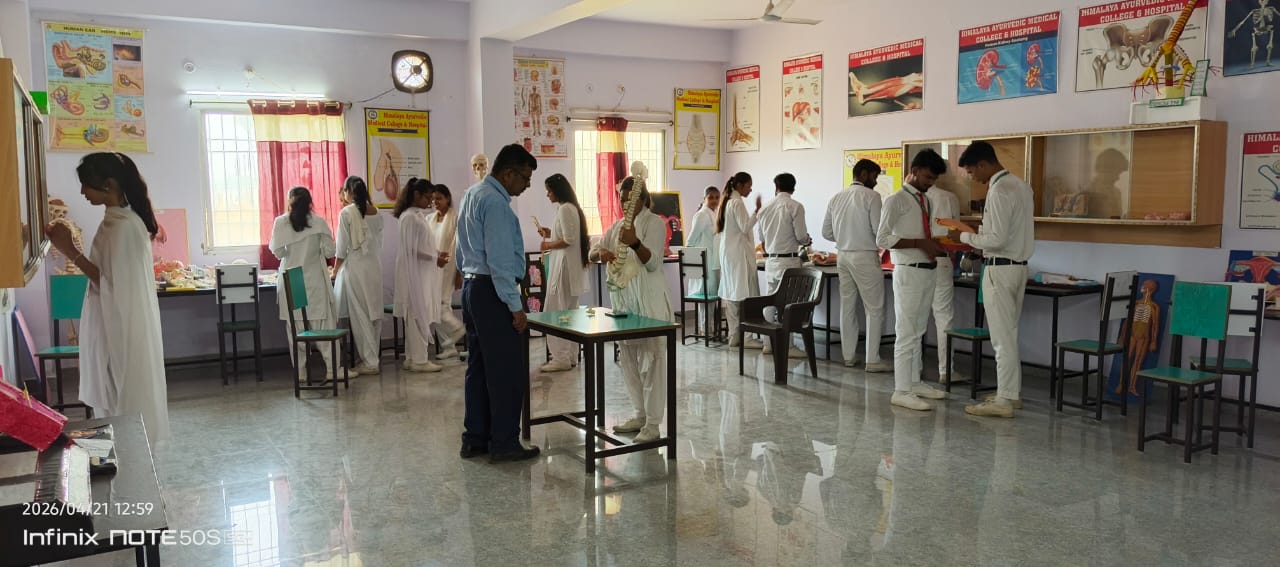
Hands-on learning through anatomical models, charts, and clinical observation
Applying anatomical knowledge to diagnosis and treatment in clinical settings
Well-equipped laboratory with anatomical models, charts, and specimens for practical learning
Comprehensive collection of Ayurvedic anatomical texts and modern reference materials
Access to 3D anatomy software and digital archives of anatomical illustrations
Begin your journey into understanding the intricate architecture of the human body through Ayurvedic principles